


30 July 2026
Your Child's First Dental Visit: What to Expect
The purpose of a first dental visit is not really to examine anything. It is to make the dentist a normal, boring place your child has always been, so that when something does need doing at eight or eighteen, it is not frightening.
The short answer
Bring them as soon as their first teeth appear, and certainly by their first birthday. The first appointment is short and almost entirely familiarisation: sitting in the chair, having a look, counting teeth, and a conversation with you about brushing and sugar. Nothing is done to a child who is not comfortable. We take children on the NHS, so your child can be seen at no cost to you. NHS dental treatment is free for under-18s, and for under-19s in full-time education.
What actually happens
Very little, deliberately. Your child can sit on your knee if they would rather. We count teeth, look at how they are coming through and whether the bite is developing normally, check for early signs of decay, and often let them hold the mirror. For a toddler it can be over in three minutes. We will not force an examination on a child who has decided against it, because winning that battle costs you the next ten years.
A useful trick: bring them along to your appointment a couple of times first. Watching a parent sit in the chair and be perfectly fine does more than any amount of explaining.
Language matters more than you would think
- Avoid reassuring them about things they have not thought of. “It won’t hurt” introduces the idea of hurt. “They’re just going to count your teeth” does not.
- Do not use “injection”, “needle”, “drill” or “pull out” in advance. We have our own child-friendly vocabulary for all of it.
- Never use the dentist as a threat. “If you don’t brush, the dentist will have to take your teeth out” creates exactly the fear that keeps adults away for decades.
- Do not pass on your own dread. If you are nervous yourself, say so to us rather than in front of them, and see our page on nervous patients.
- Keep it matter-of-fact. Not a treat, not an ordeal. Just a thing the family does.
Brushing, by age
- From the first tooth: brush twice a day, once last thing at night. A smear of fluoride toothpaste is enough for under-threes.
- From three: a pea-sized amount. Check the tube contains at least 1,000ppm fluoride, and from about age seven, 1,350 to 1,500ppm. Ask us if you are unsure which to buy.
- Spit, do not rinse. Rinsing washes the fluoride straight off. This applies to children as much as adults.
- Do the brushing for them, or supervise closely, until at least seven. Younger children genuinely cannot do it effectively, however capable they seem. Standing behind them and tilting their head back works better than facing them.
- Start cleaning between teeth once any two teeth touch.
The things that actually cause decay in children
Almost entirely how often sugar arrives, rather than how much. A juice or squash beaker carried around all afternoon is far worse than a pudding at teatime, because it keeps the acid attack running continuously.
Practical rules that make the biggest difference: water and plain milk only between meals, never fruit juice or squash in a bottle, no bottle in bed, move from bottle to a free-flow cup from around six months, and keep sweets to mealtimes rather than as a spread-out reward. Sugar-free medicines where there is a choice. And be aware that dried fruit and cereal bars are sugary and sticky, which is a bad combination however healthy the packaging looks.
Other things parents ask about
Teething: sore gums, dribbling and being generally miserable are normal. A chilled teething ring, a clean finger to rub the gum, and infant paracetamol if needed. Teething does not cause high fever, so get that checked separately.
Dummies and thumbs: not a problem in the early years. Worth working on before the adult front teeth arrive at around six or seven, because sustained pressure after that can affect how they come in. Never dip a dummy in anything sweet.
Knocked-out teeth: a knocked-out baby tooth should never be pushed back in, because it can damage the adult tooth forming behind it. A knocked-out adult tooth is the opposite and the first hour is critical. Read what to do with a knocked-out tooth before you need it, and get a mouthguard if they play contact sport.
Fissure sealants: a protective coating painted into the grooves of adult back teeth, which is quick, painless and involves no drilling. We will tell you if your child would benefit.
Related reading: Baby Teeth: When They Come Through and When They Fall Out, Children’s Toothpaste: How Much Fluoride and How Much to Use, Teething: Symptoms, What Helps and When to See a Dentist and Dummies, Thumb Sucking and Your Child’s Teeth.
Frequently asked questions
When should my child first see a dentist?
As soon as their first teeth come through, and by their first birthday at the latest. Early visits are about familiarity rather than treatment, and children who start young are markedly less anxious later.
Do baby teeth matter if they are going to fall out anyway?
Yes, considerably. They hurt when they decay, they can become infected, they hold the space and guide the adult teeth into position, and decay in baby teeth is a strong predictor of decay in adult ones. Losing them early causes crowding problems later.
My child will not open their mouth. What now?
That is a perfectly normal appointment and not a failure. We will do what we can, keep it positive, and try again next time. Repeated short, uneventful visits are exactly how a nervous child becomes a relaxed one.
Is dental treatment free for children?
Yes. We take children on the NHS, and NHS dental treatment is free for under-18s and for under-19s in full-time education. Ring reception and we will get your child booked in. Adults are seen privately or on our membership plan from £15.95 a month, so a family can have the children on the NHS alongside a parent on the plan.
We take children on the NHS, so to get yours booked in, or just to ask a question first, call us on 01625 574609. We are a family-run practice and have looked after families here since 1977, with free parking right outside, which helps when you have a pushchair.
Back to BlogComprehensive care for every smile.


General Dentistry
Personalised care designed around your oral health goals.

Cosmetic Dentistry
Restore, enhance, and transform your smile with confidence.

Dental Implants
Rediscover the confidence to smile, eat, and speak with ease.

Facial Aesthetics
Enhancing natural beauty with subtle, confidence-boosting treatments.
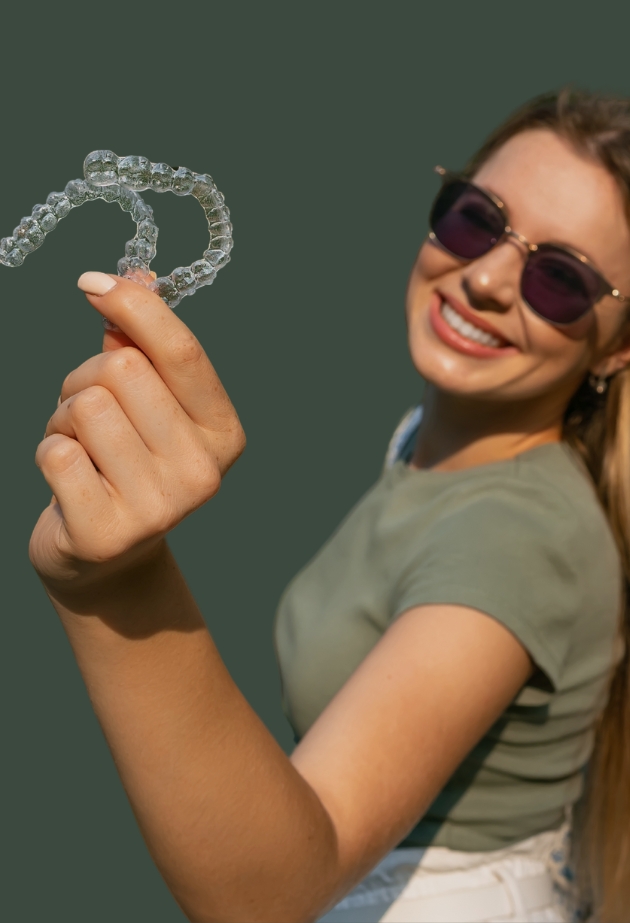
Clear Aligners
Enhance your smile with a modern, nearly invisible solution.
General Dentistry
Personalised care designed around your oral health goals.
Cosmetic Dentistry
Restore, enhance, and transform your smile with confidence.
Dental Implants
Rediscover the confidence to smile, eat, and speak with ease.
Facial Aesthetics
Enhancing natural beauty with subtle, confidence-boosting treatments.
Clear Aligners
Enhance your smile with a modern, nearly invisible solution.
Reviews
Trusted by our patients


“Unfailingly exceptional care from a finely honed team of expert practitioners. The assured manner in...”
Ellen M
“Fantastic care. My teenage daughter broke her front tooth badly. Within 4 hours of calling,...”
Peter M
“I hadn’t visited a dentist for many years as I wear dentures. However, I needed some new dentures, and as...”
Brian M
“Excellent! Top staff- experienced expert dentist with first-class bedside manner and pain-free...”
Alison T
“Such a great dentist! The staff are always super friendly and helpful, and they explain...”
Stevie L
“I have been a patient at Bollington Dental Practice for many years. The service I have received has always been...”
David A
“Bollington Dental has such a welcoming and friendly atmosphere. Everyone there is cheerful and helpful....”
Katie D
“I have to congratulate Ellie Burrows and the team at Bollington Dental. I had an old dental cap replaced after...”
Charles M
“Went in last week to get a set of retainers for whitening. It was so high-tech that I didn’t even...”
George H
“I moved to the Bollington area 10 years ago. After neglecting my teeth for several years, I needed treatment and...”
Donna C
“Fabulous service. I had a tooth extracted, and the pain got worse over 3 weeks. I rang up and was...”
Si C
“As always, 5 stars, all the way from booking, email and text confirmation to a friendly greeting on arrival and...”
Peter T
Reviews
Trusted by our patients
“Unfailingly exceptional care from a finely honed team of expert practitioners. The...”
Ellen M
“Fantastic care. My teenage daughter broke her front tooth badly. Within 4 hours of calling,...”
Peter M
“I hadn’t visited a dentist for many years as I wear dentures. However, I needed...”
Brian M
“Excellent! Top staff- experienced expert dentist with first-class bedside manner and pain-free...”
Alison T
“Such a great dentist! The staff are always super friendly and helpful, and they explain...”