



30 July 2026
Retainers: Why Straight Teeth Move Back and How to Keep Them
The single most common regret in orthodontics is not the treatment. It is stopping the retainer. Teeth do not stay where they are put, and the reason is worth understanding before you spend anything on straightening them.
The short answer
Teeth are held in bone by elastic fibres, and after they have been moved those fibres pull back towards where they came from. That tendency, called relapse, is strongest in the first year and never entirely disappears. Retainers are therefore not a temporary phase at the end of treatment, they are the permanent second half of it. If you are not prepared to wear a retainer indefinitely, straightening is probably not worth your money.
Why teeth move back
- Elastic recoil in the fibres. The main mechanism, and it is at its most powerful in the months immediately after treatment finishes. This is why the wear instructions are strictest early on.
- Bone takes time to settle. The bone around a moved tooth remodels for months afterwards. Until it has, the tooth is not securely held.
- Ordinary lifelong drift. Lower front teeth crowd gradually with age in almost everyone, whether or not they have ever had braces. Retention holds that off too.
- Tongue and lip pressure, plus habits like nail biting or pen chewing, applying small forces for hours a day.
- Grinding and clenching, which loads teeth heavily and can shift them. See our guide to teeth grinding.
The two kinds, and the honest trade-off
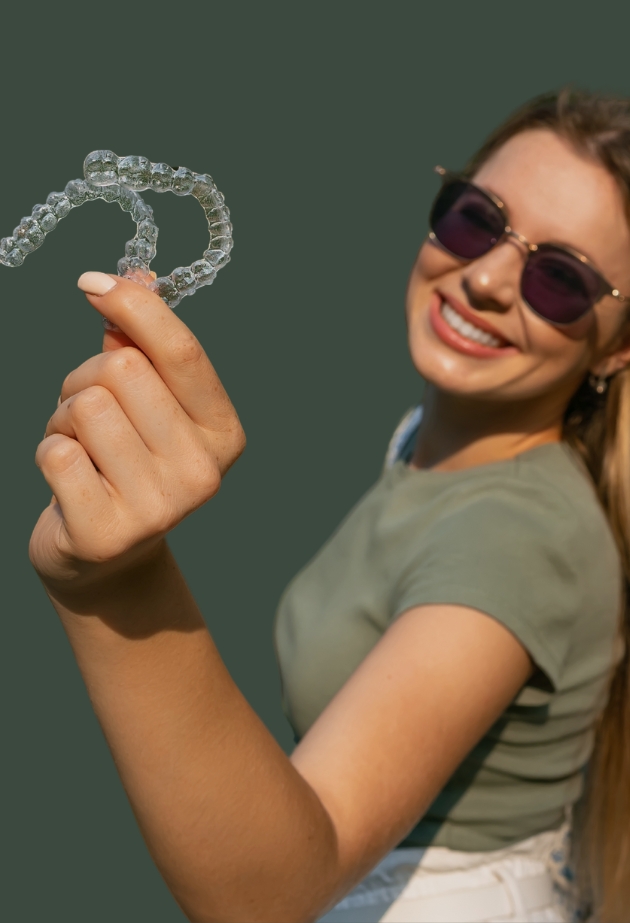
Removable retainers are clear plastic and look like a thin aligner. They are easy to clean, do not complicate your brushing, and can be worn nights only once things have settled. The obvious weakness is that they only work when they are in, and they are the ones that end up in a drawer.
Fixed retainers are a thin wire bonded behind the front teeth. They work whether you remember them or not, which is their whole advantage. The cost is that they make cleaning harder, they trap plaque and tartar, and they can debond quietly without you noticing. Anyone with a fixed retainer needs to be genuinely good at cleaning around it, and needs regular hygiene visits.
Plenty of people end up with both: a fixed wire behind the lower front teeth and a removable retainer on the upper. That combination handles the two highest-risk areas.
Looking after them
- Clean a removable retainer with cool water and a soft brush, and never with hot water, which will warp it permanently.
- Do not use toothpaste on clear retainers. It is abrasive and clouds them.
- Keep it in its case when it is out. Wrapped in a napkin is how retainers get thrown away, and this is astonishingly common.
- If it feels tight after a break, that is your teeth having started to move. Wear it more, do not force it, and ring us if it will not seat.
- If a fixed retainer wire feels loose or a section has lifted, get it seen quickly. A partly detached wire can actively move a tooth the wrong way.
- Expect to replace removable retainers periodically. They wear out.
What if my teeth have already moved?
This is a very common position: braces as a teenager, retainer abandoned at university, and now some crowding is back. The options are to accept it, to re-treat with clear aligners, which is often a shorter course than the original treatment because the movement needed is smaller, or in mild cases to reshape edges cosmetically.
What is not an option is a retainer pushing them back. A retainer holds position, it does not correct it. If they have shifted, holding them where they now are is all it will do.
What it costs
ClearCorrect treatment starts from £2,499, and the consultation is free for existing patients. Retainers are priced according to what you need, so ask and we will tell you before you commit to anything. Our full published list is on the fees page. A new patient examination is £89 including X-rays if you are not with us yet, and gums need to be healthy before any tooth is moved.
Frequently asked questions
How long do I need to wear a retainer?
Indefinitely, if you want the result to hold. Typically full-time initially, then reducing to nights, and then a few nights a week long term. The honest framing is that retention has no end date, only a reducing commitment.
What happens if I stop wearing it?
Your teeth will drift, most noticeably the lower front ones, and fastest in the first year. Some people get away with minor change and others see most of the crowding return. There is no way to know in advance which you are.
Can I get a retainer without having had braces?
Yes, and it is occasionally sensible if your teeth are already drifting and you want to hold them where they are. It holds the current position, so be clear that it will not straighten anything.
My old retainer does not fit any more. Can I still use it?
Do not force it. If it will not seat properly your teeth have moved, and pushing an ill-fitting retainer on can apply uncontrolled forces. Bring it in and we will tell you whether a new one will hold things or whether re-treatment is the realistic answer.
If you have a retainer in a drawer and teeth that have started to shift, bring it with you. Call us on 01625 574609.
Back to BlogComprehensive care for every smile.


General Dentistry
Personalised care designed around your oral health goals.

Cosmetic Dentistry
Restore, enhance, and transform your smile with confidence.

Dental Implants
Rediscover the confidence to smile, eat, and speak with ease.

Facial Aesthetics
Enhancing natural beauty with subtle, confidence-boosting treatments.
Clear Aligners
Enhance your smile with a modern, nearly invisible solution.
General Dentistry
Personalised care designed around your oral health goals.
Cosmetic Dentistry
Restore, enhance, and transform your smile with confidence.
Dental Implants
Rediscover the confidence to smile, eat, and speak with ease.
Facial Aesthetics
Enhancing natural beauty with subtle, confidence-boosting treatments.
Clear Aligners
Enhance your smile with a modern, nearly invisible solution.
Reviews
Trusted by our patients


“Unfailingly exceptional care from a finely honed team of expert practitioners. The assured manner in...”
Ellen M
“Fantastic care. My teenage daughter broke her front tooth badly. Within 4 hours of calling,...”
Peter M
“I hadn’t visited a dentist for many years as I wear dentures. However, I needed some new dentures, and as...”
Brian M
“Excellent! Top staff- experienced expert dentist with first-class bedside manner and pain-free...”
Alison T
“Such a great dentist! The staff are always super friendly and helpful, and they explain...”
Stevie L
“I have been a patient at Bollington Dental Practice for many years. The service I have received has always been...”
David A
“Bollington Dental has such a welcoming and friendly atmosphere. Everyone there is cheerful and helpful....”
Katie D
“I have to congratulate Ellie Burrows and the team at Bollington Dental. I had an old dental cap replaced after...”
Charles M
“Went in last week to get a set of retainers for whitening. It was so high-tech that I didn’t even...”
George H
“I moved to the Bollington area 10 years ago. After neglecting my teeth for several years, I needed treatment and...”
Donna C
“Fabulous service. I had a tooth extracted, and the pain got worse over 3 weeks. I rang up and was...”
Si C
“As always, 5 stars, all the way from booking, email and text confirmation to a friendly greeting on arrival and...”
Peter T
Reviews
Trusted by our patients
“Unfailingly exceptional care from a finely honed team of expert practitioners. The...”
Ellen M
“Fantastic care. My teenage daughter broke her front tooth badly. Within 4 hours of calling,...”
Peter M
“I hadn’t visited a dentist for many years as I wear dentures. However, I needed...”
Brian M
“Excellent! Top staff- experienced expert dentist with first-class bedside manner and pain-free...”
Alison T
“Such a great dentist! The staff are always super friendly and helpful, and they explain...”