


15 August 2026
How Much Do Braces Cost in the UK?
Asking what braces cost in the UK gets you one of the widest price ranges in dentistry, roughly £1,500 at one end and north of £10,000 at the other, which is not much use without knowing what moves the number. This guide sets out the typical ranges by type, what the NHS does and does not cover, and, because guides like this are usually written to sell you something, an honest note up front: we provide clear aligner treatment, not fixed braces, so where fixed braces are the right answer for someone we say so and refer, and this article will do the same.
The short answer
Typical private prices across the UK: metal fixed braces roughly £1,500 to £3,500, ceramic (tooth-coloured) fixed braces roughly £2,000 to £5,000, lingual braces fitted behind the teeth roughly £3,000 to £10,000, and clear aligners roughly £1,500 to £5,500 depending on brand and case complexity. NHS braces are effectively for under-18s with a clinically assessed need, and are free for them. At Bollington Dental Practice, ClearCorrect clear aligner treatment starts from £2,499, with 0% finance from around £2.50 a day.
What each type costs, and why
Metal fixed braces, typically £1,500 to £3,500 privately. The traditional bracket-and-wire system. Least expensive, most visible, and still the workhorse for complex corrections because the dentist or orthodontist controls tooth movement precisely and continuously. Longer, more complex treatment sits at the top of the range.
Ceramic fixed braces, typically £2,000 to £5,000. The same mechanics with tooth-coloured brackets that show far less. The premium buys discretion, not faster treatment.
Lingual braces, typically £3,000 to £10,000. Fixed braces mounted on the inside surfaces of the teeth, invisible from the front. The most expensive option because they are custom-made and fiddly to fit and adjust, offered by a limited number of specialist providers.
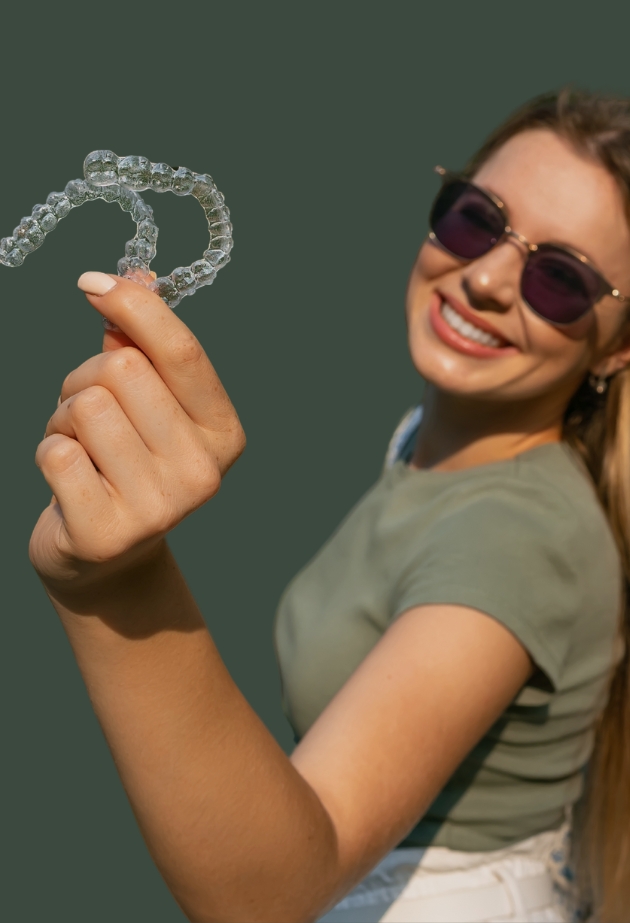
Clear aligners, typically £1,500 to £5,500. A series of nearly invisible removable trays, each moving the teeth a fraction. Well suited to the majority of adult cases: crowding, spacing, relapse from teenage braces, and mild to moderate bite issues. The wide range reflects brand and complexity, with short cosmetic corrections at the bottom and long complex cases at the top. Our own ClearCorrect guide covers how aligner treatment actually runs.
Whatever the system, check what the quoted price includes. The meaningful quote covers the scan or impressions, all aligners or adjustments, reviews through treatment, and retainers at the end, which are not optional if you want to keep the result. A cheap headline price that excludes retainers and reviews is not cheap.
What the NHS covers
NHS orthodontics is aimed at under-18s whose bite problems meet a clinical threshold, assessed on a scale called the IOTN. For children who qualify, treatment is free, though waiting lists are real and cosmetic-only cases do not qualify. For adults, NHS braces are rare and limited to severe cases with a health need, which is why adult orthodontics in the UK is overwhelmingly private. If you are unsure whether your child would qualify, ask at a check-up and we will give you a straight answer and refer appropriately.
Our honest position, since you are reading this on a dental practice’s website
We chose to offer ClearCorrect clear aligners, from £2,499 with a free consultation for existing patients, because aligners handle the large majority of the adult cases that walk through our door, and the digital scanner we already use makes the process accurate and comfortable, no putty impressions. We do not fit metal, ceramic or lingual fixed braces. Where a case genuinely needs fixed appliances or specialist orthodontics, complex bite corrections and large movements mainly, we say exactly that and refer you, because stretching aligners to do a job they are not suited to produces mediocre results and slow refunds of trust. Teeth and gums also need to be healthy before any tooth movement starts, so treatment begins with an examination, £89 for new patients including X-rays.
Want the full picture on prices? Our treatment cost checker shows every published fee, what each includes, and what plan members save, and builds you an estimate in under a minute.
Frequently asked questions
How much do braces cost for adults in the UK?
Typical private ranges are £1,500 to £3,500 for metal fixed braces, £2,000 to £5,000 for ceramic, £3,000 to £10,000 for lingual braces behind the teeth, and £1,500 to £5,500 for clear aligners. Complexity drives the price more than anything: a six-month cosmetic correction and a two-year bite reconstruction sit at opposite ends of every range.
Can adults get braces on the NHS?
Rarely. NHS orthodontics is targeted at under-18s who meet a clinical need threshold, for whom it is free. Adult NHS treatment is limited to severe cases with a genuine health justification, so almost all adult orthodontics in the UK is private.
Are clear aligners cheaper than braces?
They overlap. Aligners for a straightforward case can cost less than fixed braces, while complex aligner treatment can cost more than metal braces for the same correction. The honest comparison is per case, which is what a consultation with a scan establishes. Our ClearCorrect treatment starts from £2,499 with 0% finance available.
What is included in the cost of braces?
It varies by provider, which is exactly what to check. A complete price includes the scan or impressions, the appliances or full aligner series, all adjustment and review appointments, and retainers at the end. Retainers matter most: teeth drift back without them, and a quote that excludes them understates the real cost of keeping your result.
Wondering which route fits your teeth?
Book a consultation and we will give you an honest read: whether aligners suit your case, from £2,499, or whether fixed braces with a specialist would serve you better, in which case we will say so and refer you. Existing patients get the aligner consultation free; new patients start with an £89 examination. Call 01625 574609, or see our fees page.
Back to BlogComprehensive care for every smile.


General Dentistry
Personalised care designed around your oral health goals.

Cosmetic Dentistry
Restore, enhance, and transform your smile with confidence.

Dental Implants
Rediscover the confidence to smile, eat, and speak with ease.

Facial Aesthetics
Enhancing natural beauty with subtle, confidence-boosting treatments.
Clear Aligners
Enhance your smile with a modern, nearly invisible solution.
General Dentistry
Personalised care designed around your oral health goals.
Cosmetic Dentistry
Restore, enhance, and transform your smile with confidence.
Dental Implants
Rediscover the confidence to smile, eat, and speak with ease.
Facial Aesthetics
Enhancing natural beauty with subtle, confidence-boosting treatments.
Clear Aligners
Enhance your smile with a modern, nearly invisible solution.
Reviews
Trusted by our patients


“Unfailingly exceptional care from a finely honed team of expert practitioners. The assured manner in...”
Ellen M
“Fantastic care. My teenage daughter broke her front tooth badly. Within 4 hours of calling,...”
Peter M
“I hadn’t visited a dentist for many years as I wear dentures. However, I needed some new dentures, and as...”
Brian M
“Excellent! Top staff- experienced expert dentist with first-class bedside manner and pain-free...”
Alison T
“Such a great dentist! The staff are always super friendly and helpful, and they explain...”
Stevie L
“I have been a patient at Bollington Dental Practice for many years. The service I have received has always been...”
David A
“Bollington Dental has such a welcoming and friendly atmosphere. Everyone there is cheerful and helpful....”
Katie D
“I have to congratulate Ellie Burrows and the team at Bollington Dental. I had an old dental cap replaced after...”
Charles M
“Went in last week to get a set of retainers for whitening. It was so high-tech that I didn’t even...”
George H
“I moved to the Bollington area 10 years ago. After neglecting my teeth for several years, I needed treatment and...”
Donna C
“Fabulous service. I had a tooth extracted, and the pain got worse over 3 weeks. I rang up and was...”
Si C
“As always, 5 stars, all the way from booking, email and text confirmation to a friendly greeting on arrival and...”
Peter T
Reviews
Trusted by our patients
“Unfailingly exceptional care from a finely honed team of expert practitioners. The...”
Ellen M
“Fantastic care. My teenage daughter broke her front tooth badly. Within 4 hours of calling,...”
Peter M
“I hadn’t visited a dentist for many years as I wear dentures. However, I needed...”
Brian M
“Excellent! Top staff- experienced expert dentist with first-class bedside manner and pain-free...”
Alison T
“Such a great dentist! The staff are always super friendly and helpful, and they explain...”