
6 October 2026
Gap Between Front Teeth: Causes and How to Close It
By the team at Bollington Dental Practice, under the clinical direction of Dr Ellie Burrows, Principal Dentist. Updated October 2026.
Some people love the gap between their front teeth and would not dream of changing it. Others have spent years smiling with their mouth closed because of it. Either way, it helps to know why the gap is there, because a gap you have had since childhood and a gap that has opened up in your thirties or forties are quite different things, and the second deserves a check before anyone talks about closing it.
The short answer
A gap between the front teeth, which dentists call a diastema, is usually harmless and often simply comes down to the size of the teeth not quite matching the size of the jaw. Small gaps can often be closed with composite bonding, from £175 per tooth. Gaps that need the teeth moving can be closed with clear aligners, from £2,499, and veneers are an option where the teeth also need reshaping or a colour change. A gap that appears or widens in adulthood is different, because it can be a sign of gum disease, and that needs checking and treating first.
Why gaps between front teeth happen
Tooth size and jaw size. The most common reason is simply proportion. If the teeth are slightly small for the jaw, the spare space has to go somewhere, and it often shows between the two upper front teeth. This kind of gap is usually present from when the adult teeth come through and stays stable.
Small or missing side teeth. The teeth either side of the two front teeth, the lateral incisors, are sometimes narrow and pointed, sometimes called peg laterals, or occasionally missing altogether. Either leaves extra space that can spread out as gaps.
The lip frenum. The frenum is the small fold of tissue that joins the inside of the upper lip to the gum. In some people it is thick or extends low, down between the front teeth, and can hold them apart. Usually it is left alone. Occasionally it is reduced with a minor procedure alongside closing the gap, and if needed, your dentist will explain whether this applies to you.
Habits. Thumb or finger sucking that continues once the adult front teeth arrive, and in some people a habit of pushing the tongue against the front teeth, can tip the teeth forward and open up spaces.
In children. Gaps between baby teeth are normal and useful, because adult teeth are bigger and need the room. A gap between newly arrived adult upper front teeth is also common, and it often narrows or closes as the adult canines come through, usually around the age of 11 or 12. It is generally worth waiting for that stage before deciding a child’s gap needs treatment, and your dentist will keep an eye on it at check-ups.
A missing tooth further back. When a tooth is lost, neighbouring teeth can drift into the space over time, and gaps can open up elsewhere in the arch as a result.
When a gap is a warning sign
A gap in front teeth that has appeared or grown in adult life should be checked before anything cosmetic is planned. The most important cause to rule out is gum disease. As gum disease progresses, it reduces the bone that holds the teeth in place, and the front teeth can start to drift and fan forward, opening spaces that were never there before. Other signs include gums that bleed when you brush, gums that look red or swollen, a bad taste, teeth that look longer than they used to, or teeth that feel slightly loose.
Gum disease is very common and very treatable, especially when it is caught early, but closing a gap without treating it first would be building on unstable ground. The gums need to be healthy and stable before teeth are moved or reshaped, and sometimes once they are, the gap reduces a little on its own.
When to get urgent help. Call us the same day if a tooth suddenly becomes loose after a knock, or if you have a painful swelling on the gum, pus or a throbbing tooth. We offer same-day slots where possible on 01625 574609, and out of hours NHS 111 can advise. If facial swelling is spreading towards your eye, or affects your breathing or swallowing, go to A&E or call 999.
Options for closing a gap
Leaving it. If the gap is stable, your gums are healthy and you like it, there is no clinical reason to close it. It is your smile.
Composite bonding. Tooth-coloured composite resin is added to the sides of the teeth to widen them slightly and close the space, usually with little or no drilling and often in a single visit. It suits small gaps well. The limit is proportion: closing a large gap with bonding alone would make the front teeth look too wide, so for bigger spaces it is often combined with moving the teeth first. Bonding needs occasional polishing and can stain or chip over time, so it is a maintained treatment rather than a one-off. It is from £175 per tooth here, and our composite bonding page explains the process.
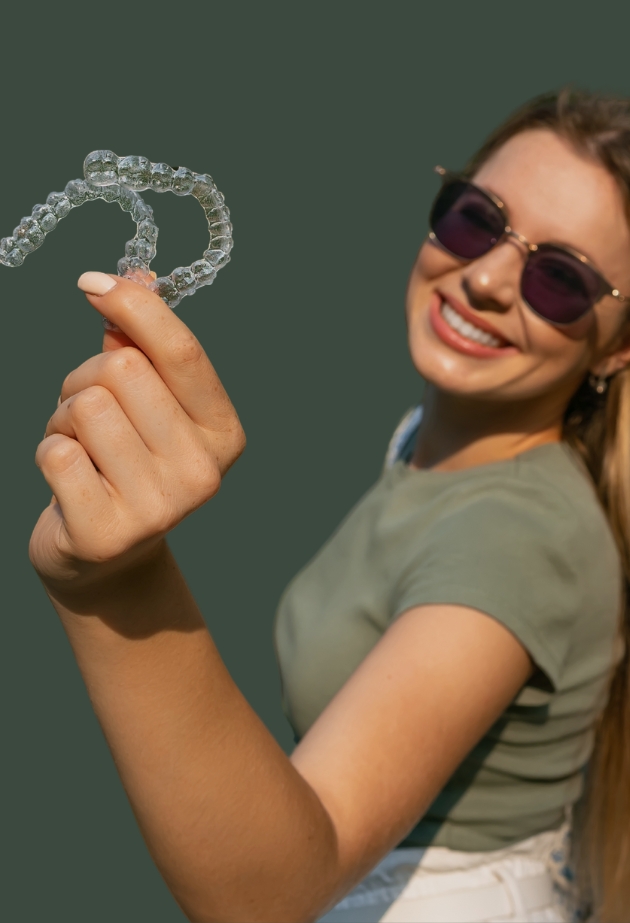
Clear aligners. Where the gap is larger, where there are several spaces, or where the bite would benefit too, aligners move the teeth together rather than building them out. We provide ClearCorrect, from £2,499, and the ClearCorrect consultation is free for existing patients. Our ClearCorrect page explains how it works. Some people have aligners followed by a little bonding to perfect the shape of the teeth once they are in position.
Veneers. Veneers cover the front of the teeth and can close a gap while also changing colour and shape, which suits people who want more than the gap altering. Composite veneers are from £225 per tooth and porcelain veneers from £650 per tooth. Porcelain veneers usually involve removing a thin layer of enamel, which cannot be undone. Our guide to composite bonding versus veneers compares the two in detail.
Fixed braces. Large gaps, or gaps that are part of a wider bite problem, are sometimes better treated with fixed braces. We do not provide fixed braces, so if that would suit you better, we will say so and discuss referral.
Gaps from a missing tooth. A space left by a lost tooth is a different question, about replacing the tooth rather than closing a gap, and our guide to missing tooth options compares implants, bridges and dentures.
Keeping a closed gap closed
A gap between the upper front teeth has a stubborn tendency to reopen after it has been closed by moving the teeth, so retention is essential. That usually means a thin wire bonded behind the front teeth, a removable retainer worn at night, or both, kept for the long term. Our guide to retainers after braces covers the options, and the same principles apply after aligners. Retainers do not have a published price here, so ask us. Bonding and veneers do not move the teeth, so they do not need retainers in the same way, but they do need regular check-ups and good cleaning at the edges.
What it costs and the NHS position
Closing a gap for appearance alone is cosmetic treatment, which is not generally available on the NHS. Our prices are published in full: bonding from £175 per tooth, composite veneers from £225 per tooth, porcelain veneers from £650 per tooth and ClearCorrect from £2,499. For new patients the starting point is an examination, £89 including X-rays, which is also where the health of your gums is checked. Gum disease treatment, where needed, comes first.
Frequently asked questions
Can a gap between front teeth close on its own?
In children, often yes. A gap between new adult front teeth commonly narrows or closes as the adult canines come through, around the age of 11 or 12. In adults, a gap is unlikely to close on its own, and a gap that is getting wider should be checked for gum disease.
How much does it cost to close a gap with bonding?
Composite bonding here is from £175 per tooth, and a small gap between the two front teeth is often closed by adding bonding to both teeth. Your dentist will confirm how many teeth need treating after an examination, and all our prices are on our fees page.
Will a gap come back after it is closed?
Gaps closed by moving the teeth have a real tendency to reopen, which is why long-term retainers are essential, often a thin wire bonded behind the front teeth. Gaps closed with bonding or veneers do not reopen in the same way, but the bonding needs maintaining and can chip or stain over time.
Why has a gap appeared between my front teeth?
A gap that appears in adulthood can be a sign of gum disease, which reduces the bone supporting the teeth and lets front teeth drift forward. It can also follow a lost tooth, tongue or lip habits, or changes in the bite. It is worth having it examined before considering any cosmetic treatment.
Thinking about your gap?
Whether you want to close a gap or simply want to know why one has appeared, an examination answers it properly. Call 01625 574609. New patient examinations are £89 including X-rays, bonding is from £175 per tooth, and every price is on our fees page.
Back to BlogComprehensive care for every smile.


General Dentistry
Personalised care designed around your oral health goals.

Cosmetic Dentistry
Restore, enhance, and transform your smile with confidence.

Dental Implants
Rediscover the confidence to smile, eat, and speak with ease.

Facial Aesthetics
Enhancing natural beauty with subtle, confidence-boosting treatments.
Clear Aligners
Enhance your smile with a modern, nearly invisible solution.
General Dentistry
Personalised care designed around your oral health goals.
Cosmetic Dentistry
Restore, enhance, and transform your smile with confidence.
Dental Implants
Rediscover the confidence to smile, eat, and speak with ease.
Facial Aesthetics
Enhancing natural beauty with subtle, confidence-boosting treatments.
Clear Aligners
Enhance your smile with a modern, nearly invisible solution.
Reviews
Trusted by our patients


“Unfailingly exceptional care from a finely honed team of expert practitioners. The assured manner in...”
Ellen M
“Fantastic care. My teenage daughter broke her front tooth badly. Within 4 hours of calling,...”
Peter M
“I hadn’t visited a dentist for many years as I wear dentures. However, I needed some new dentures, and as...”
Brian M
“Excellent! Top staff- experienced expert dentist with first-class bedside manner and pain-free...”
Alison T
“Such a great dentist! The staff are always super friendly and helpful, and they explain...”
Stevie L
“I have been a patient at Bollington Dental Practice for many years. The service I have received has always been...”
David A
“Bollington Dental has such a welcoming and friendly atmosphere. Everyone there is cheerful and helpful....”
Katie D
“I have to congratulate Ellie Burrows and the team at Bollington Dental. I had an old dental cap replaced after...”
Charles M
“Went in last week to get a set of retainers for whitening. It was so high-tech that I didn’t even...”
George H
“I moved to the Bollington area 10 years ago. After neglecting my teeth for several years, I needed treatment and...”
Donna C
“Fabulous service. I had a tooth extracted, and the pain got worse over 3 weeks. I rang up and was...”
Si C
“As always, 5 stars, all the way from booking, email and text confirmation to a friendly greeting on arrival and...”
Peter T
Reviews
Trusted by our patients
“Unfailingly exceptional care from a finely honed team of expert practitioners. The...”
Ellen M
“Fantastic care. My teenage daughter broke her front tooth badly. Within 4 hours of calling,...”
Peter M
“I hadn’t visited a dentist for many years as I wear dentures. However, I needed...”
Brian M
“Excellent! Top staff- experienced expert dentist with first-class bedside manner and pain-free...”
Alison T
“Such a great dentist! The staff are always super friendly and helpful, and they explain...”